
How to Make a Small Apartment Feel Bigger by Removing Clutter
Learning how to make a small apartment feel bigger does not mean you need to knock down walls, install expensive built-ins, or start a major renovation project. If you rent your home, you may not even be allowed to make permanent changes Trying to make a small apartment feel bigger does not mean you need to knock down walls, install expensive built-ins, or start a major renovation project. If you rent your home, you may not even be allowed to make permanent changes. These simple changes can help make a small apartment feel bigger without spending money on a renovation.
The good news is that the feeling of space is not determined only by the number of square feet in your apartment. Furniture placement, lighting, storage, color, and visual clutter can all influence how open a room feels.
With a few thoughtful changes, you can make your apartment feel more comfortable and less crowded without changing its structure.
1. Start by Removing Visual Clutter
One of the quickest ways to make a small apartment feel bigger is to reduce the amount of visual clutter.
A room can feel crowded even when it does not contain a huge amount of furniture. Too many items on tables, countertops, shelves, and floors can make the entire space feel busy.
Start with the surfaces you see most often.
Look at:
- Coffee tables
- Kitchen counters
- Entryway surfaces
- Bedside tables
- Open shelving
You do not need to throw everything away. Instead, try grouping similar items together and storing things you do not use every day.
A simple rule can help: if you use something regularly, keep it accessible. If you rarely use it, consider storing it somewhere less visible.
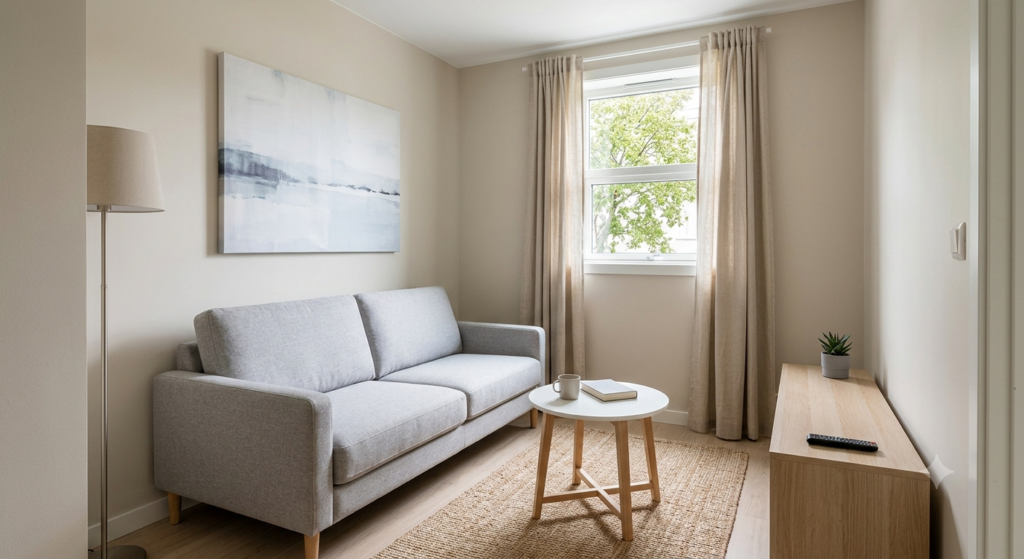
2. Choose Furniture That Fits the Room
Large furniture can quickly overwhelm a small apartment.
Before buying a sofa, table, bed, or storage unit, measure both the available space and the route into your apartment. A piece of furniture may fit in a room but still make the space difficult to move around.
Look for furniture that fits your actual lifestyle.
For example:
- A compact sofa may be more practical than an oversized sectional.
- A narrow console may work better than a deep cabinet.
- A small dining table may be enough for one or two people.
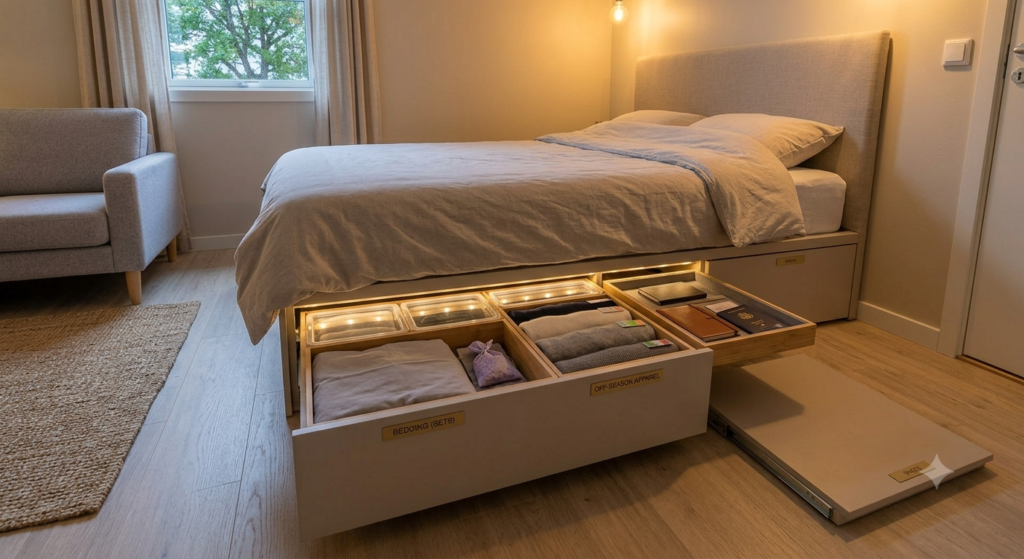
- A bed with built-in storage may eliminate the need for another storage unit.
You do not need to fill every empty area. Leaving some open floor space can make a room feel more comfortable.
Consider Furniture With More Than One Purpose
Multi-functional furniture is particularly useful in small apartments.
A storage ottoman can provide seating and storage. A folding desk can serve as a workspace without taking up the entire room all day. A nesting table can provide extra surface space when needed and take up less room when not in use. Choosing furniture that fits the room properly is one of the most effective ways to make a small apartment feel bigger.
Before buying anything, ask yourself:
What problem does this piece of furniture solve?
If the answer is unclear, you may not need it.
3. Create Clear Walking Paths
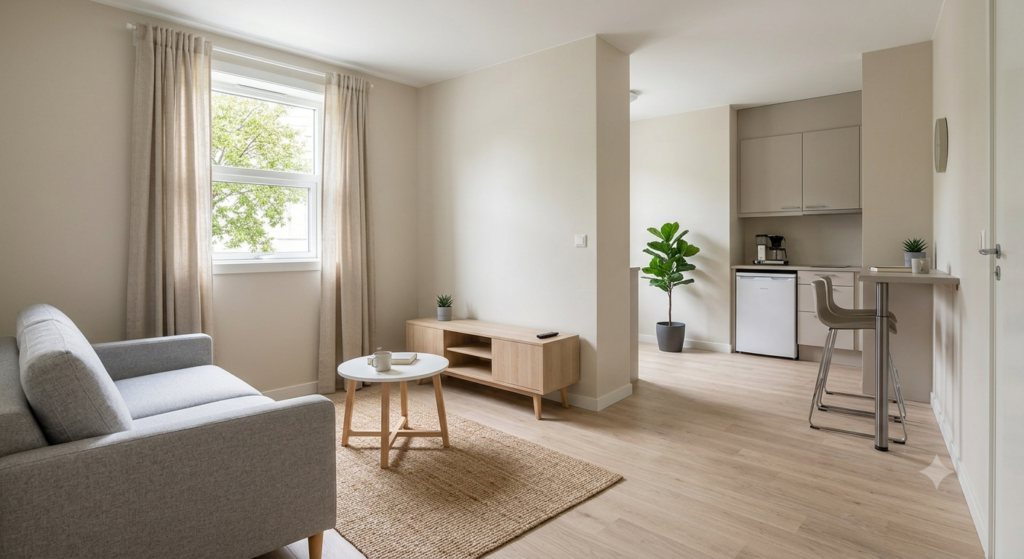
A room can feel much smaller when furniture interrupts the natural path through the space.
Try to create clear routes between the areas you use most often. You should not have to constantly walk around furniture or squeeze between objects.
In a living room, for example, think about the route between:
- The entrance
- The sofa
- The kitchen
- The bathroom
- The balcony or windows
You may be able to improve the feeling of space simply by moving furniture a few inches or changing its direction.
Before buying new storage or furniture, experiment with your existing layout. Sometimes the best solution is already in your apartment.
4. Use Mirrors to Add a Sense of Depth
Mirrors can make a room feel more open by reflecting light and creating a greater sense of visual depth.
You do not need to cover an entire wall with mirrors. A single appropriately placed mirror may be enough to change how a room feels.
A mirror can work particularly well:
- Opposite a window
- Near a source of natural light
- In a narrow hallway
- In a small entryway
If you are renting, avoid installing a heavy mirror without checking whether your wall can support it and whether your lease permits the installation method.
For a no-drill approach, consider renter-friendly mounting solutions that are appropriate for the weight of the mirror and the type of wall surface.
Always follow the product instructions carefully.
5. Improve Lighting in Dark Corners
A dark room can often feel smaller than a bright room of the same size.
Look around your apartment for areas that feel dark or underused. These might include:
- Corners away from windows
- Hallways
- Entryways
- Areas beneath shelves
- Workspaces
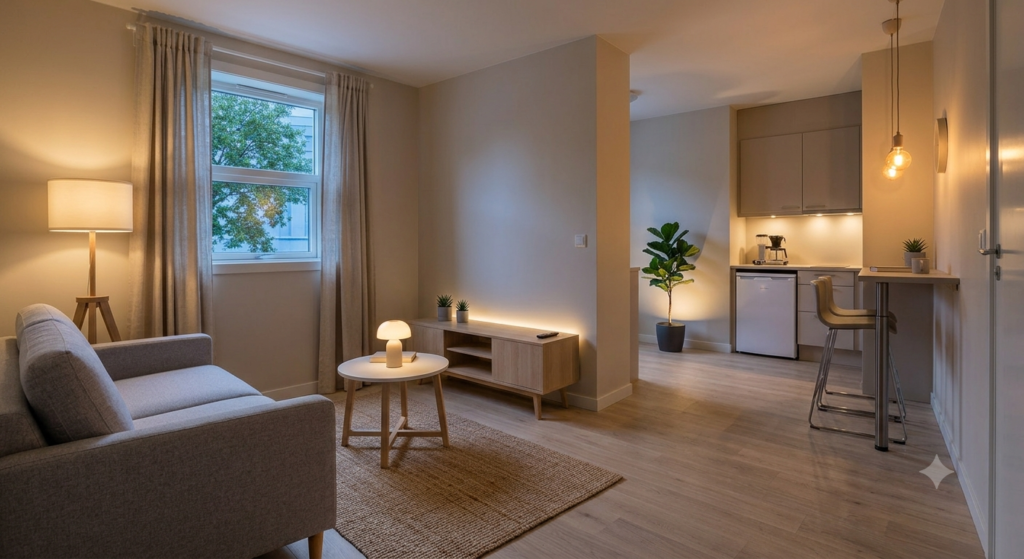
Adding the right type of lighting can make these areas feel more usable.
Instead of relying on a single ceiling light, consider using different layers of lighting:
- General room lighting
- Task lighting for reading or working
- Accent lighting for darker areas
Smart lighting can be particularly useful for renters because smart bulbs and portable lamps usually do not require permanent electrical changes.
You can also use timers or schedules with compatible products to make lighting more convenient. For more information about choosing efficient lighting for your home, you can explore the U.S. Department of Energy’s guidance on energy-efficient lighting.
6. Use Vertical Space Without Making the Room Feel Crowded
When floor space is limited, it can be tempting to use every available surface.
Instead, think vertically.
Tall, narrow storage may use less floor space than wide, bulky furniture. Open shelving can also provide storage while keeping frequently used items accessible.
However, be careful not to fill every wall and shelf.
Too many objects at different heights can create visual clutter. Try to keep frequently used items organized and leave some open space around them.
For renters, removable hooks, freestanding shelving, and other temporary storage solutions can provide flexibility.
Before installing anything, check your lease and use products according to their weight limits and instructions. Better lighting can also make a small apartment feel bigger by reducing dark corners and improving the sense of openness.
7. Choose a Simple Color Approach
You do not need to paint your entire apartment white to make it feel larger.
The important thing is to create a visual flow between areas.
Using similar or complementary colors can make a small apartment feel more connected. Too many strong visual contrasts in a small space can make each area feel separated.
You can create variety through:
- Textiles
- Artwork
- Plants
- Small decorative items
- Lighting
If you are renting, work with the existing wall color and introduce your personal style through items that can easily move with you.
8. Use Hidden Storage Whenever Possible
Visible storage can quickly make a small apartment feel crowded.
Whenever possible, use storage areas that keep everyday items out of sight.
Useful locations may include:
- Under the bed
- Inside storage ottomans
- Behind doors
- Inside cabinets
- Under tables
The goal is not to hide everything. It is to avoid allowing everyday items to spread across every visible surface.
A small apartment becomes easier to manage when every frequently used item has a practical place to go.
9. Create Separate Zones in a Studio Apartment
If you live in a studio or open-plan apartment, separate areas can make the space feel more organized.
You do not necessarily need a permanent wall.
You can create zones using:
- A rug
- A sofa
- A bookcase
- Lighting
- A folding screen
- Furniture placement
For example, one area can function as a living room while another becomes a workspace or dining area.
The key is to give each area a clear purpose without blocking natural light or making the apartment difficult to move through.
A well-organized studio can feel more spacious because the room feels intentional rather than crowded.
10. Reduce Cable Clutter
Cables can make a small apartment look messy very quickly.
Chargers, laptop cables, television wires, and extension cords can create visual clutter even when the rest of the room is organized.
Try to:
- Group cables together.
- Keep charging cables in one location.
- Use cable clips or organizers where appropriate.
- Avoid leaving unused cables on the floor.
- Keep your desk setup simple.
Cable management is especially useful for renters because many solutions are portable and do not require permanent changes.
Explore cable management solutions on Amazon
Only recommend products that genuinely fit the problem you have described.
11. Use Smart Technology to Reduce Physical Clutter
Smart technology can sometimes help reduce the number of separate devices and controls in your apartment.
For example, depending on your setup, smart lighting may allow you to control several lights through one app or compatible system.
Smart plugs can also help organize the way selected devices are controlled.
The goal is not to buy more technology simply because it is smart. Instead, choose products that solve a specific problem.
Ask:
Will this device make my apartment easier to use, or will it simply add another item to the room?
A smaller number of useful devices is usually better than a large collection of technology that creates more clutter.
If you are interested in building a connected rental home without permanent changes, you can also read our guide on how to create a smart apartment as a renter without drilling.
12. Leave Some Space Empty
One of the most overlooked ways to make a small apartment feel bigger is to stop trying to use every available space.
Empty space is not wasted space.
An open area around furniture can make the room easier to move through and more comfortable to use.
Before adding another shelf, table, or storage box, ask yourself whether the item solves a real problem.
Sometimes the best improvement is removing something you no longer need. If you want to make a small apartment feel bigger, start with the areas that create the most visual clutter.
A Simple Weekend Plan for a More Spacious Apartment
You do not need to change your entire apartment in one day.
Try this simple plan:
Saturday morning
Remove items you no longer use from visible surfaces.
Saturday afternoon
Experiment with your furniture layout and create clearer walking paths.
Sunday
Improve one dark area with better lighting and organize one hidden storage area.
After that, live with the changes for a few days. You may discover that your apartment already has more usable space than you thought. To make a small apartment feel bigger, focus on the way you use space rather than simply adding more furniture.
Final Thoughts
Learning how to make a small apartment feel bigger does not require a renovation project.
By reducing visual clutter, choosing appropriately sized furniture, improving lighting, using hidden storage, creating clear zones, and managing cables, you can make your home feel more open and comfortable.
As a renter, the best solutions are often flexible ones. Choose improvements that can adapt to your lifestyle and move with you when your lease ends.
You do not need to completely redesign your apartment. Start with one area that feels crowded, make a small change, and see how the space feels afterward.
Sometimes, creating more space is less about adding something new and more about making better use of what you already have.