
10 Essential Energy-Saving Tips for Renters
“Finding practical energy-saving tips for renters is essential if you want to lower your monthly electric bills.”
Implementing energy-saving tips for renters is one of the smartest ways to keep your monthly utility costs manageable without making permanent structural changes to your apartment. Renting comes with many advantages, but controlling your home’s insulation or upgrading major appliances isn’t usually one of them. Fortunately, you don’t need your landlord’s permission—or a massive budget—to lower your electricity and heating bills today.
Here are 10 lease-friendly energy-saving tips for renters that deliver real financial savings while preserving your full security deposit.
1. Eliminate Phantom Loads with Smart Power Strips
Even when turned off, electronics draw passive standby power known as “vampire draw” or “phantom load”. According to the U.S. Department of Energy, standby power accounts for up to 10% of an average home’s total electricity usage.
By plugging your entertainment system and home office setup into a smart power strip, you can cut off power to idle peripheral devices automatically.
2. Upgrade to LEDs (And Keep Your Landlord’s Bulbs)
Incandescent lightbulbs convert up to 90% of their energy into heat rather than visible light. Swapping them out for ENERGY STAR-rated LED bulbs uses 75% less energy and lasts up to 25 times longer.
- Renter strategy: Unscrew your apartment’s original bulbs, label them, and store them in a cardboard box. Before you move out, swap the old bulbs back in and take your LEDs to your new apartment!
3. Hang Thermal Insulated Curtains
Windows account for roughly 25% to 30% of residential heating and cooling energy loss. If your apartment has thin mini-blinds or drafty window frames, thermal blackout curtains act as a thermal barrier.
4. Optimize Thermostat Schedules for Maximum Savings
Adjusting your thermostat when you are away or asleep yields instant savings on your monthly bill.
- In Summer: Aim for 78°F (26°C) when you are at home, and nudge it higher when away.
- In Winter: Set it to 68°F (20°C) during waking hours, and lower it at night.
Dialing back your thermostat by 7° to 10°F for 8 hours a day can reduce your annual heating and cooling costs by up to 10%.
5. Block Drafts with Removable Weather Stripping
Notice a breeze coming from under your front door or around window sills? Cold drafts force your heater or air conditioner to cycle continuously.
Instead of permanent alterations, use lease-safe alternatives:
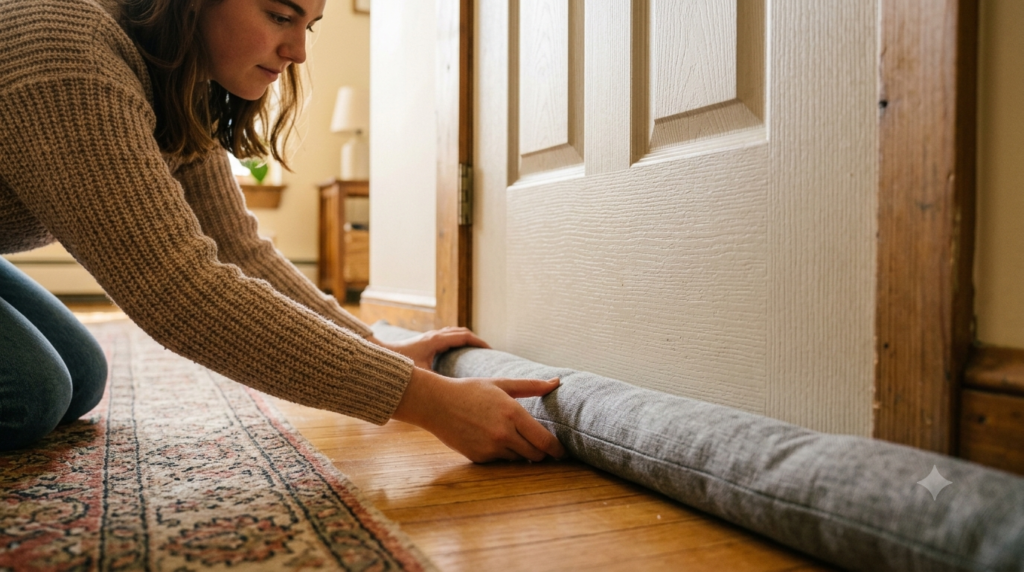
- Place a fabric draft stopper at the base of your entryway door.
- Apply peel-and-stick foam tape along drafty window sashes. It removes cleanly without damaging wall paint or wood finish.
- “Some of the best energy-saving tips for renters require zero extra tools or setup time.”
6. Wash Laundry Cycles in Cold Water
About 75% to 90% of the energy your washing machine uses goes entirely toward heating the water. Modern laundry detergents are engineered to clean just as effectively in cold water cycles.
Switching to cold water reduces hot water heater demands immediately while preserving your clothes’ colors and fabrics.
7. Improve Refrigerator Air Circulation
Because your apartment refrigerator runs continuously, small efficiency tweaks make a big cumulative difference:
- Leave 2 inches of clearance between the back of the fridge and the wall so air circulates over the condenser coils.
- Keep internal temp settings at 37°–40°F for the fridge compartment and 0°F for the freezer.
8. Cook with Countertop Appliances Instead of the Oven
Firing up a full-sized electric oven rapidly heats your entire apartment kitchen, causing your air conditioner to work twice as hard in warm weather.
- Air fryers, toaster ovens, and microwaves consume 30% to 70% less electricity than conventional ovens.
- They prepare meals faster while generating far less ambient indoor heat.
9. Set Ceiling Fans to Seasonal Directions
Ceiling fans cool people, not spaces, through the wind-chill effect. Ensure your fan blade switch is set correctly for the season:
| Season | Fan Rotation Direction | Airflow Type | Benefit |
| Summer | Counterclockwise | Downdraft | Creates a cool breeze effect |
| Winter | Clockwise (Low speed) | Updraft | Pulls cool air up and pushes warm air down |
Remember: Always turn off fans when leaving a room to avoid wasting power.
10. Clean and Replace HVAC Air Filters Regularly
A dirty, clogged air filter chokes system airflow, forcing the blower motor to draw significantly more power to compensate.
- Check if your landlord or building management provides free replacement filters.
- Swap disposable filters every 30 to 60 days to keep your HVAC system operating at peak efficiency.
- “By putting these simple energy-saving tips for renters into practice, you can keep your apartment comfortable and cut costs instantly.”