“Learning how to set up a smart apartment as a renter doesn’t mean losing your security deposit or drilling into walls.”
You can make your apartment smarter, more comfortable, and even more energy-efficient without drilling holes, replacing permanent fixtures, or making changes that could create problems when your lease ends.
The key is to focus on portable smart devices, removable mounting solutions, and renter-friendly upgrades that can move with you when you move.
Whether you want better lighting, more control over your energy use, improved security, or a more convenient daily routine, you can build a smart apartment without turning your rental into a construction project.
What Makes a Smart Apartment Renter-Friendly?
A renter-friendly smart apartment should be built around three simple principles:
- No permanent alterations
- Easy installation and removal
- Devices that you can take with you
Instead of installing hardwired smart switches or drilling into walls to mount equipment, renters can use wireless technology and temporary installation methods.
This approach gives you many of the benefits of a smart home while keeping your security deposit and lease requirements in mind.
1. Start With Smart Lighting
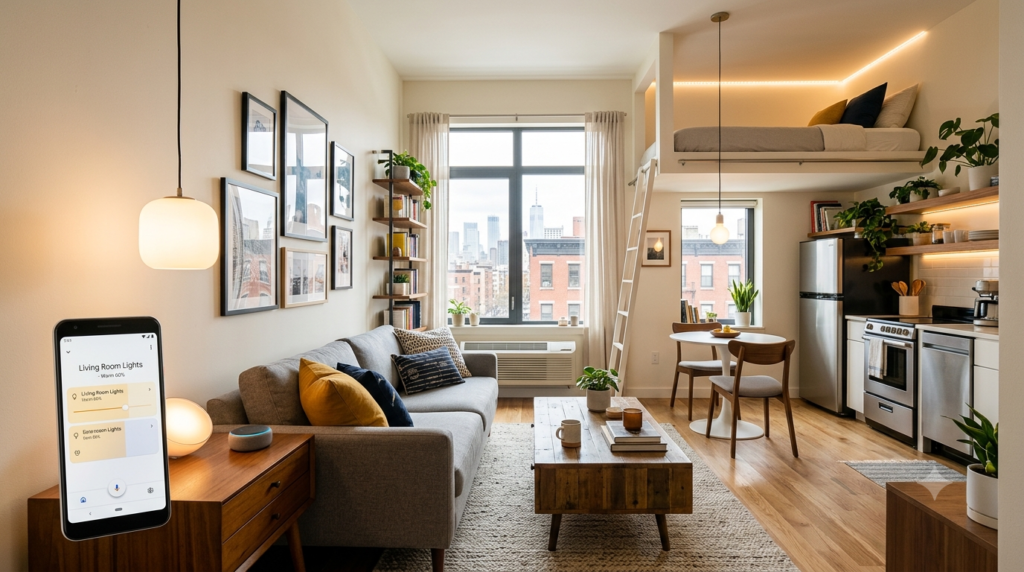
Lighting is one of the easiest ways to make a rental apartment feel smarter.
Smart bulbs can usually be installed by simply replacing a standard bulb. You do not need to rewire the apartment or change the existing light fixture.
Depending on the product, you may be able to control the lighting through:
- A smartphone app
- Voice commands
- Automated schedules
- Motion-based routines
For example, you could create a routine that gradually turns on your lights in the morning or switches off selected lights when you leave home.
Smart bulbs can also help create different lighting environments in a small apartment. A brighter setting can help when you are working, while softer lighting can make the living room feel more comfortable in the evening.
Renter-friendly tip: Start with one or two bulbs in the rooms you use most often instead of trying to automate the entire apartment at once.
2. Use Smart Plugs Without Changing Your Electrical System
Smart plugs are another simple way to add smart features to a rental.
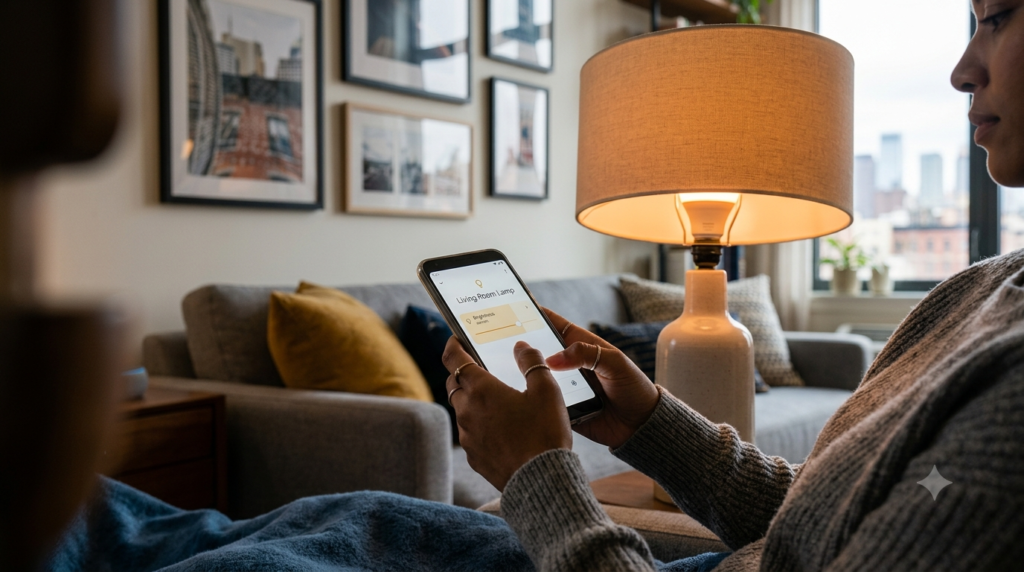
They plug into existing electrical outlets and allow you to control compatible devices through an app or voice assistant.
You can use them with items such as:
- Floor lamps
- Table lamps
- Fans
- Coffee makers
- Small appliances
A smart plug can also help you create routines. For example, a lamp connected to a smart plug could turn on automatically in the evening.
However, smart plugs should be used responsibly. Always check the device’s instructions and make sure the appliance is suitable for use with a smart plug.
For renters, the biggest advantage is simplicity: when you move, you unplug the device and take it with you.
3. Improve Your Wi-Fi Without Drilling
A reliable Wi-Fi connection is the foundation of many smart apartments.
Smart bulbs, speakers, cameras, streaming devices, and other connected products all depend on a stable network.
If your apartment has weak Wi-Fi in certain areas, you may be able to improve coverage with a wireless mesh Wi-Fi system or another network solution that does not require permanent installation.
Before buying anything, check:
- The size of your apartment
- The location of your existing router
- The number of connected devices
- Whether your internet plan can support your usage
In a small apartment, you may not need an expensive setup. Sometimes simply placing the router in a more open and central location can improve the connection.
4. Add Renter-Friendly Smart Security
Security is an important consideration for renters, but you should avoid making changes that violate your lease.
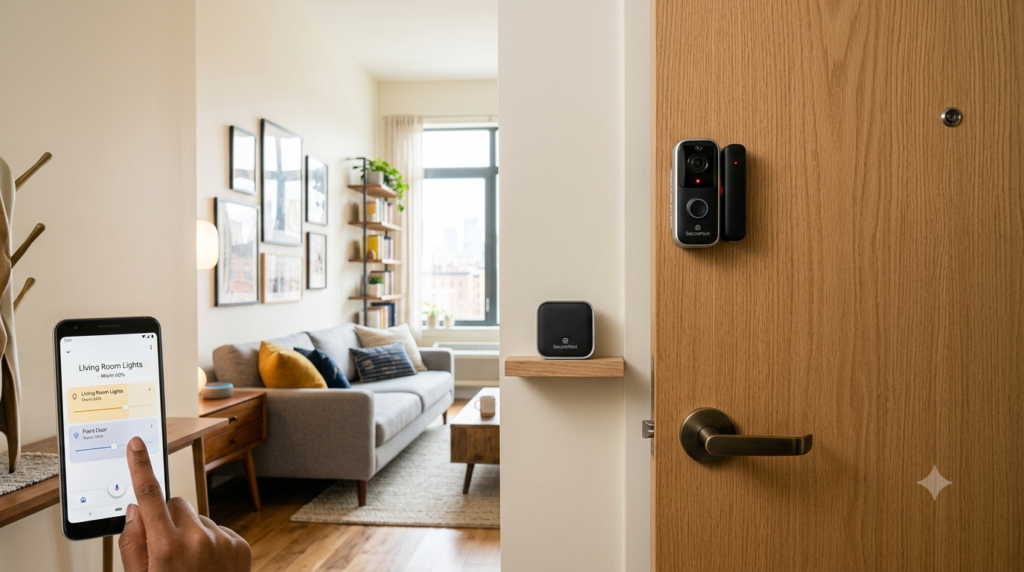
Some security devices are designed for temporary installation. Depending on the product and your rental agreement, options may include:
- Portable indoor cameras
- Smart door sensors
- Removable entry sensors
- Portable video doorbells where permitted
Before installing anything outside your apartment or attaching a device to a shared building entrance, check your lease and building rules.
You should also think carefully about privacy. Avoid placing cameras in private areas and review how a device stores and handles recordings.
The best renter-friendly security setup is one that improves your peace of mind without creating a permanent change to the property.
5. Make Your Apartment More Energy Efficient
Smart technology can also help renters understand and manage energy use.
You may not be able to replace appliances or install permanent energy systems, but you can still make practical improvements.
Consider:
- Smart plugs that help monitor certain devices
- LED lighting
- Programmable heating or cooling solutions where compatible
- Smart power routines
- Energy-efficient portable appliances
One simple habit is to identify devices that consume power when they are not actively being used.
A smart plug or power strip may help you manage selected electronics more conveniently. For example, entertainment equipment could be switched off when you go to bed instead of remaining on unnecessarily.
The goal is not to buy every smart device available. The goal is to use technology where it solves a real problem.
6. Use Removable Mounting Solutions Carefully
Many renters avoid smart home devices because they assume everything needs to be drilled into a wall.
That is not always the case.
Some lightweight devices can be mounted using removable adhesive solutions or other temporary mounting methods.
These can be useful for:
- Small sensors
- Lightweight lights
- Cable organizers
- Remote controls
- Small smart home accessories
Before attaching anything to a painted wall, always check the instructions for the mounting product.
Different paint types and wall surfaces can react differently. If you are concerned about damage, test a small, less visible area first or choose a freestanding solution instead.
A renter-friendly smart home is not just about the device. It is also about how the device is installed.
7. Keep Smart Devices Organized in a Small Apartment
Smart technology can quickly create clutter.
A small apartment can begin to feel crowded when you have multiple chargers, hubs, cables, and devices placed around the room.
A simple organization system can make a big difference.
Try to:
- Keep similar devices together
- Use cable management solutions that do not damage walls
- Avoid buying devices that perform the same function
- Choose compact products where possible
- Keep instruction manuals and accessories in one place
Before buying a new smart device, ask yourself:
What problem will this solve in my apartment?
If the answer is unclear, you may not need it.
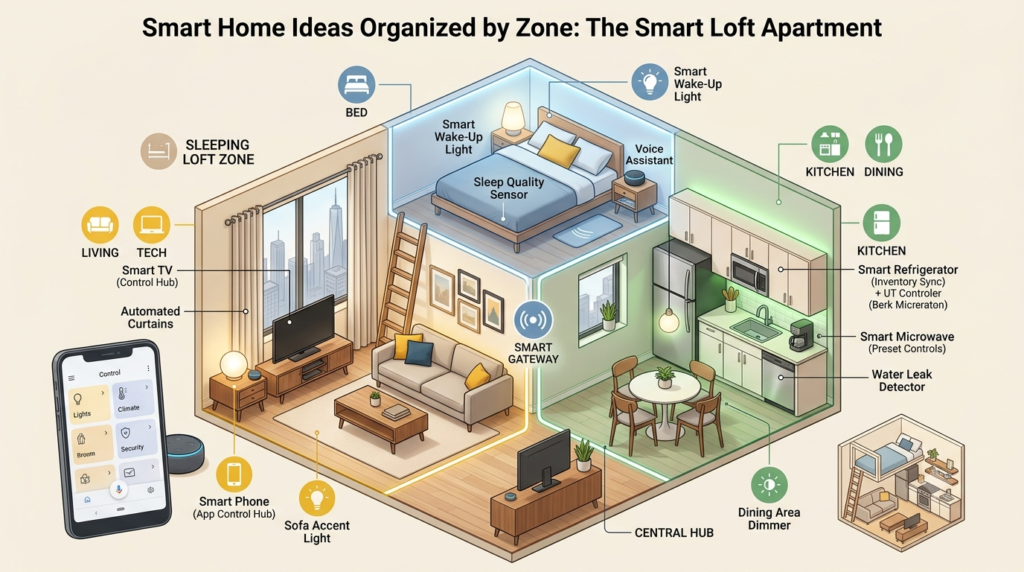
8. Build Your Smart Apartment One Room at a Time
You do not need to automate your entire apartment in one weekend.
A better approach is to start with the room where technology can make the biggest difference.
Living room
Start with smart lighting, a smart plug, or a convenient entertainment setup.
Bedroom
Consider lighting routines and devices that help create a calmer evening environment.
Kitchen
Smart plugs may be useful for selected compatible appliances, depending on the manufacturer’s instructions.
Entryway
A portable sensor or renter-friendly security solution may help you monitor activity.
Starting small makes it easier to understand what you actually use. It also prevents you from spending money on technology that ends up sitting unused.
What to Avoid as a Renter
Before making any smart home upgrade, avoid:
- Drilling holes without permission
- Replacing permanent fixtures without approval
- Modifying electrical wiring
- Installing equipment on shared building property without permission
- Using adhesive products without checking the surface
- Buying devices without checking compatibility
If you are unsure whether an installation is allowed, check your lease or ask your property manager.
A smart apartment should make your life easier—not create a problem when you move out.
The Best Smart Apartment Is the One That Fits Your Lifestyle
Creating a smart apartment as a renter does not require expensive equipment or permanent renovations.
Start with the areas that genuinely affect your daily life.
Maybe you want better lighting. Maybe you want to reduce unnecessary energy use. Maybe you want a more convenient way to control your apartment while keeping everything portable.
The best approach is to choose small, flexible upgrades that solve real problems.
With wireless devices, portable technology, renter-friendly installation methods, and a little planning, you can create a smarter and more comfortable apartment without drilling into the walls or making permanent changes.
And when it is time to move, you can simply pack up your smart home and take it with you.
Frequently Asked Questions
Can renters create a smart home without drilling?
Yes. Many smart home devices are designed to be installed without permanent changes. Wireless devices, smart bulbs, smart plugs, and portable technology can help renters add smart features without drilling.
What is the easiest smart home upgrade for an apartment?
Smart lighting is often one of the easiest places to start because many smart bulbs can be installed in existing light fixtures without changing the electrical system.
Are smart home devices worth it for renters?
They can be, especially when the devices are portable and solve a genuine problem. Renters can take many smart devices with them when they move.
How can I make my apartment more energy efficient without renovations?
Start with simple changes such as LED lighting, reducing unnecessary standby power use, and using compatible smart devices to manage selected appliances and electronics.
Should I ask my landlord before installing smart home devices?
You should check your lease before making any physical changes or installing equipment on shared or exterior property. Portable devices that do not alter the property may not require permission, but rules vary by rental and building.